
Overview of Function Composition Worksheets
These worksheets guide students through evaluating composite functions, offering step‑by‑step solutions and answer keys. Students practice f(g(x)) and g(f(x)) with linear, quadratic, and exponential examples, enhancing problem‑solving skills. Downloadable PDFs include answer keys for instant feedback. 2026. OK!
Historical Context and Educational Value
The concept of function composition dates back to the 18th‑century work of mathematicians such as Euler, who explored the idea of applying one function to the output of another. In the 19th century, the formal notation f∘g was introduced, allowing teachers to present composite operations in a concise form. Modern high‑school curricula adopt this notation to bridge algebraic manipulation with real‑world modeling.
Worksheets that focus on composing linear, quadratic, polynomial, and exponential functions provide a scaffold for students to practice substitution and simplification. By working through step‑by‑step examples and then verifying with answer keys, learners develop procedural fluency and conceptual understanding. The inclusion of multiple‑choice questions and word problems encourages critical thinking and application.
Educational research shows that explicit instruction in composition enhances students’ ability to solve complex equations and to interpret functions in physics, economics, and computer science. The downloadable PDF format ensures accessibility for diverse learning environments, while the answer key facilitates quick grading and immediate feedback. This combination of historical depth and practical utility makes composition worksheets a valuable resource for both teachers and students.
These PDF worksheets are used in middle and high school math, offering step‑by‑step practice, quick grading, and accessible formats for diverse learners for all levels!!

Function Types Covered in Worksheets

These worksheets cover linear, quadratic, polynomial, exponential, and constant functions, allowing students to practice composing two or three functions. Each worksheet includes step‑by‑step solutions and downloadable PDFs with answer keys for instant feedback. Students use PDFs to review concepts before exams.
Linear, Quadratic, and Exponential Examples
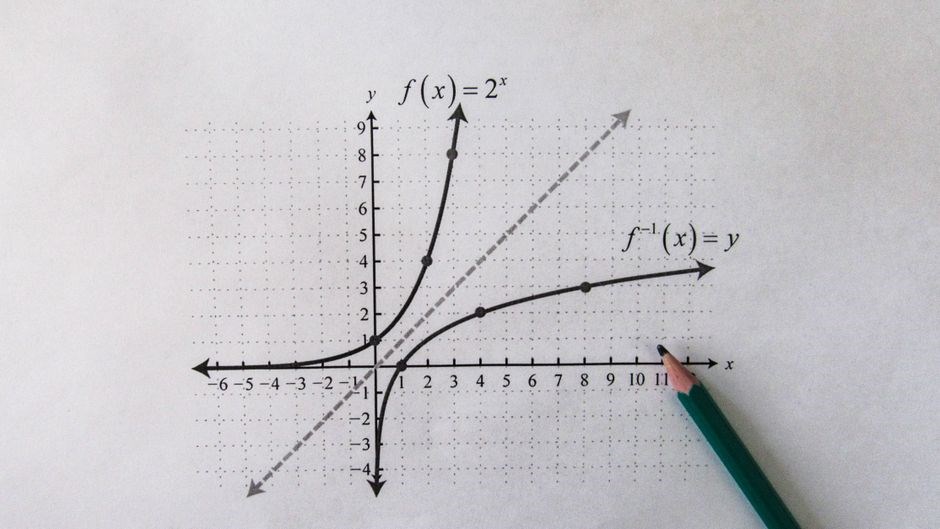
Students encounter a variety of concrete problems that illustrate how to build composite functions from simple building blocks. One common linear pair is f(x)=2x+3 and g(x)=x−5; the worksheet asks students to compute f(g(4)), g(f(4)), and to simplify each expression. A quadratic example might use f(x)=x²−4x+4 and g(x)=3x, prompting the student to evaluate f(g(2)) and g(f(2)) and to factor the resulting polynomial. For exponential practice, the set often includes f(x)=2^x and g(x)=x+1, with tasks such as finding f(g(3)) and g(f(3)) and then simplifying the exponential expression. Each problem is accompanied by a detailed solution that walks through substitution, simplification, and verification steps. The worksheets also feature mixed‑type challenges where a linear function is composed with an exponential or a quadratic, encouraging students to recognize patterns and apply algebraic techniques consistently. The downloadable PDF format provides a clean, printable layout, while the answer key PDF offers instant grading. By working through these examples, students strengthen their ability to manipulate algebraic expressions and understand the underlying structure of composite functions, which is essential for higher‑level mathematics. Students diagram composition, boosting spatial insight.

Downloadable PDF Resources
Students can download free PDF worksheets covering function composition, complete with answer keys for quick grading. The PDFs include linear, quadratic, and exponential examples, step‑by‑step solutions, and printable formats for classroom use. Ideal for homework review.

Available Formats: PDF, DOC, TXT
Students and teachers can access the composition‑of‑functions worksheets in three convenient formats: PDF for high‑quality printouts, DOC for easy editing in Word, and TXT for plain‑text use in coding or scripting environments. The PDF version contains fully formatted problems, solutions, and an answer key, making it ideal for classroom distribution and self‑study. The DOC file allows educators to modify questions, add custom annotations, or translate the material into other languages without losing the original layout. The TXT version provides a lightweight, platform‑agnostic option that can be imported into spreadsheet software or used in automated grading scripts. All formats are downloadable from the same resource page, ensuring that users can choose the format that best fits their workflow. Whether you need a printable handout, an editable template, or a simple text file for integration with digital learning tools, the collection covers every need. The files are updated quarterly to reflect new problem sets and updated answer keys, so users always have the most current material at their fingertips.
These resources are compatible with both Windows and macOS, ensuring that teachers can embed the worksheets into digital lesson plans or distribute them via learning management systems. The TXT format is especially useful for integration with spreadsheet tools like Excel or Google Sheets, allowing for automated grading scripts that parse numeric answers. Additionally, the DOC version supports comments, enabling peer review and collaborative editing in real time. All files are licensed under a Creative Commons Attribution‑ShareAlike, permitting educators to adapt the material for their specific curriculum while maintaining the integrity of the original problems.

Answer Key Features

The answer key provides instant feedback, step‑by‑step solutions, and a quick‑grading format. Each problem includes the correct value, intermediate steps, and a concise explanation. Teachers can use the key for formative assessment, while students can self‑check and learn from mistakes. Use it to track progress!!
Quick Grading Formats
Teachers can instantly assess student work with the downloadable PDF answer key that offers a concise, step‑by‑step grading rubric. Each problem is paired with a brief solution, a numeric score, and a color‑coded indicator that highlights correct, partially correct, and incorrect responses. The format allows quick comparison against the master key, enabling teachers to identify common misconceptions and adjust instruction on the fly. For self‑study, students can print the key, mark their answers, and use the same rubric to evaluate their own work. The PDF includes a “quick‑grade” table that lists the correct value, the student’s answer, a point value, and a short comment. This structure supports formative assessment, immediate feedback, and efficient classroom management. The key is fully compatible with most learning management systems, allowing teachers to upload the PDF and share it with students for remote grading. By using this streamlined approach, educators save time, reduce grading errors, and provide clear, actionable feedback that helps students master function composition skills. 2026. The key also highlights the importance of verifying domain compatibility before composing functions, a common source of errors. Teachers can also export the key to spreadsheet software for automated grading, saving additional time. Students can use the key to self‑grade and reflect on errors, fostering metacognitive skills. By integrating this quick‑grading framework into daily lessons, educators promote a culture of immediate feedback and continuous improvement, ultimately boosting student confidence in mastering function composition.

Step‑by‑Step Problem Solving
Step‑by‑step worksheets guide students through evaluating f(g(x)) and g(f(x)) with linear, quadratic, exponential examples. Each problem shows substitution, simplification, and final value, enabling clear, logical reasoning and immediate feedback. Use the provided key for instant grading. and review. again.
Illustrative Calculations
Students begin by selecting two functions, such as f(x)=2x+3 and g(x)=x^2. To compute the composite f(g(4)), first evaluate the inner function: g(4)=4^2=16. Then substitute this result into the outer function: f(16)=2(16)+3=35. The reverse composite g(f(4)) follows a similar pattern: f(4)=2(4)+3=11, then g(11)=11^2=121. These calculations illustrate the importance of order and correct substitution. For a more complex example, consider h(x)=5 and quadratic function q(x)=x^2−4x+7. The composite h(q(3)) requires evaluating q(3)=3^2−4(3)+7=9−12+7=4, then h(4)=5. Conversely, q(h(3)) first yields h(3)=5, then q(5)=5^2−4(5)+7=25−20+7=12. By systematically breaking down each step, students can verify their work and avoid common pitfalls such as misapplying the order of operations or incorrectly simplifying intermediate expressions. The worksheets provide a series of such examples, each accompanied by a detailed solution that highlights key algebraic techniques, including factoring, completing the square, and applying exponent rules. This step‑by‑step approach reinforces conceptual understanding and builds confidence in handling composite functions across a range of algebraic contexts. Additionally, the resources include a section on exponential compositions, where students evaluate f(g(x)) with f(x)=e^x and g(x)=ln(x). For instance, f(g(20)) = e^(ln(20)) = 20, while g(f(1)) = ln(e^1) = 1. These examples demonstrate how inverse functions cancel each other out, a useful strategy for simplifying compositions. Finally, the worksheets encourage students to practice with three‑function compositions, such as f(g(h(2))), where f(x)=x−1, g(x)=3x, and h(x)=x/2. Calculating step by step: h(2)=1, g(1)=3, f(3)=2. By mastering these layered calculations, learners gain robust toolkit for tackling any composite function problem they encounter. Teachers can use these illustrative calculations to scaffold student learning, ensuring that each step is clear before moving on to more challenging problems.

Teacher Implementation Tips
Use the PDF worksheets to scaffold lessons: start with guided examples, then let students solve independently. Provide answer keys for instant feedback. Encourage peer review and discuss common errors. Adapt difficulty by adding more complex composites.Add optional chalenge
Lesson Planning Guidance
When integrating the composition‑of‑functions worksheets into a unit, begin by aligning each worksheet’s difficulty with the class’s mastery level. For a 9th‑grade algebra cohort, start with linear‑to‑linear composites, then progress to quadratic or exponential pairings. Use the PDF answer keys to create a quick‑check activity: after students complete a worksheet, they compare their solutions to the key, noting any discrepancies. This immediate feedback loop reinforces conceptual understanding and corrects misconceptions before moving on. To promote deeper engagement, incorporate a “challenge” section in the worksheet where students must compose three functions, encouraging them to think beyond the two‑function norm. Schedule a brief formative assessment after the challenge to gauge readiness for the next lesson. Additionally, consider pairing the worksheets with a short video demonstration of the composition process, which can be accessed via the PDF’s embedded links or a separate online resource. Finally, allocate time for a reflective discussion, prompting students to articulate the steps they took and the strategies that worked best. This reflective practice helps solidify procedural fluency and prepares students for real‑world applications of function composition. By embedding these worksheets into a curriculum, educators can reinforce function composition concepts across multiple grade levels, ensuring mastery before advancing to inverse functions or transformations. This system approach promotes confidence and mathematically fluency.
Student Success Strategies
Students should review the PDF answer key after each worksheet, noting any errors. Practice with the step‑by‑step solutions, then attempt the challenge problems. Use visual aids, such as function trees, to map compositions. Consistent rehearsal builds confidence and. Discuss solutions in groups to help!??
Common Mistakes and How to Avoid Them
One frequent error is confusing the order of operations when composing functions—students often write f(g(x)) as g(f(x)). To prevent this, always write the inner function first, then apply the outer function, and double‑check the notation. Another pitfall is overlooking domain restrictions; for instance, using a square‑root function inside a rational expression can produce extraneous solutions if negative values are not excluded. A useful tactic is to list the domain of each function before composing, then intersect the domains to confirm validity.
Algebraic simplification mistakes also arise when students combine like terms incorrectly or forget to distribute parentheses. A systematic approach—first expanding, then collecting like terms, and finally simplifying—helps maintain accuracy. When dealing with exponential or logarithmic compositions, remember to apply the base and to use the property that ln(e^x)=x only when the argument is positive.
Finally, many students skip the verification step. After computing a composite value, plug the result back into the outer function to ensure consistency. If the numbers do not match, retrace the steps. Using a calculator for intermediate values can catch rounding errors early. Consistent practice with guided worksheets that include detailed answer keys reinforces these habits and reduces the likelihood of recurring mistakes.
Double‑check by substituting the final answer back into the original function; this confirms the composition is correct again .!!